
Making the complex easy
Combinum CPQ makes it easy to configure complex products thanks to its innovative rule engine.
The configurator guides the sales managers who can get back quickly to the customers with accurate quotes. See below for some examples in how this is done.
Combinum has a rule engine designed for both simple and advanced product constraints. This strategy makes the configurator easy and labor efficient to maintain and at the same time allows challenging rule scenarios to be modelled.
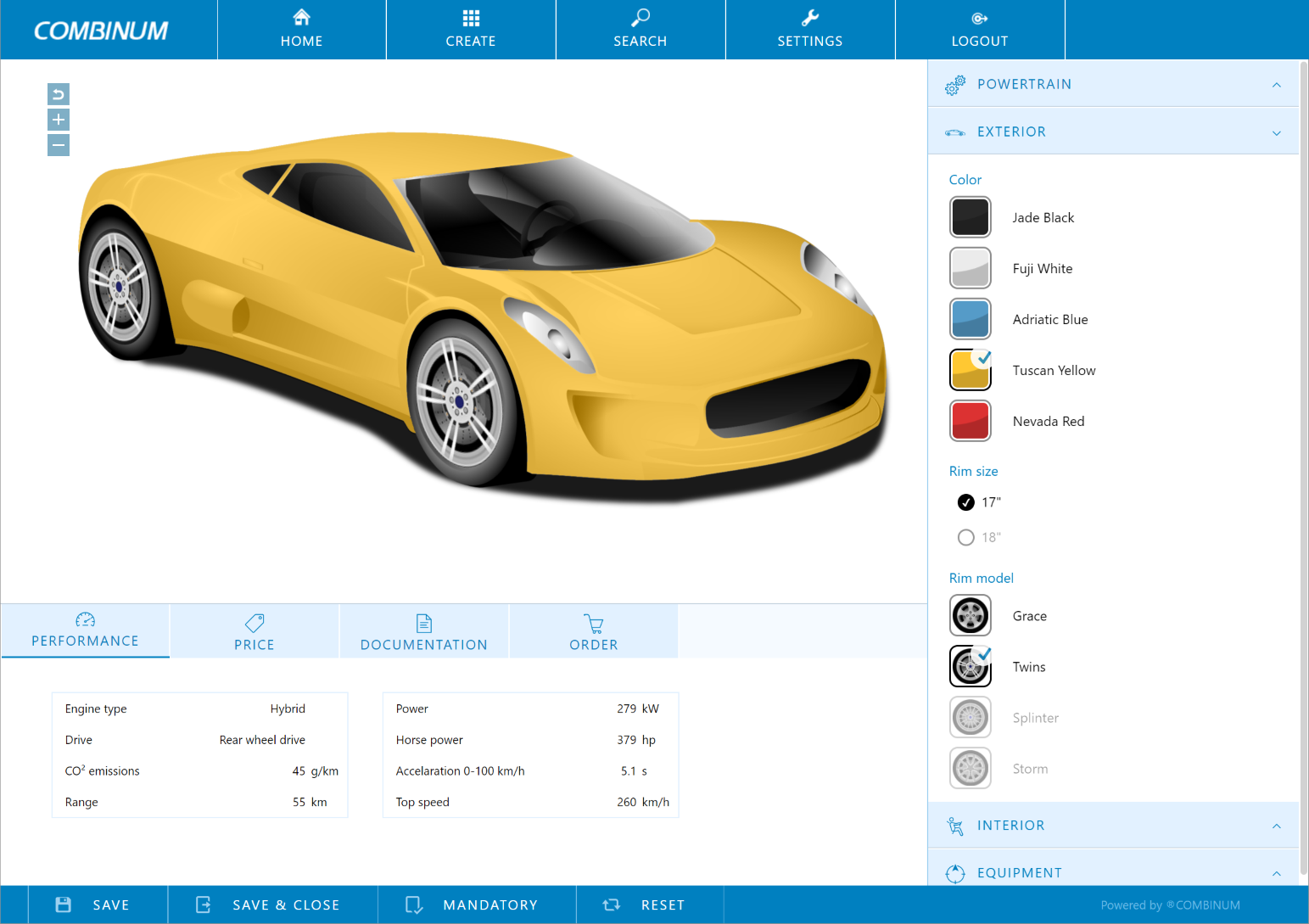
Guide your sales managers and accelerate the revenue
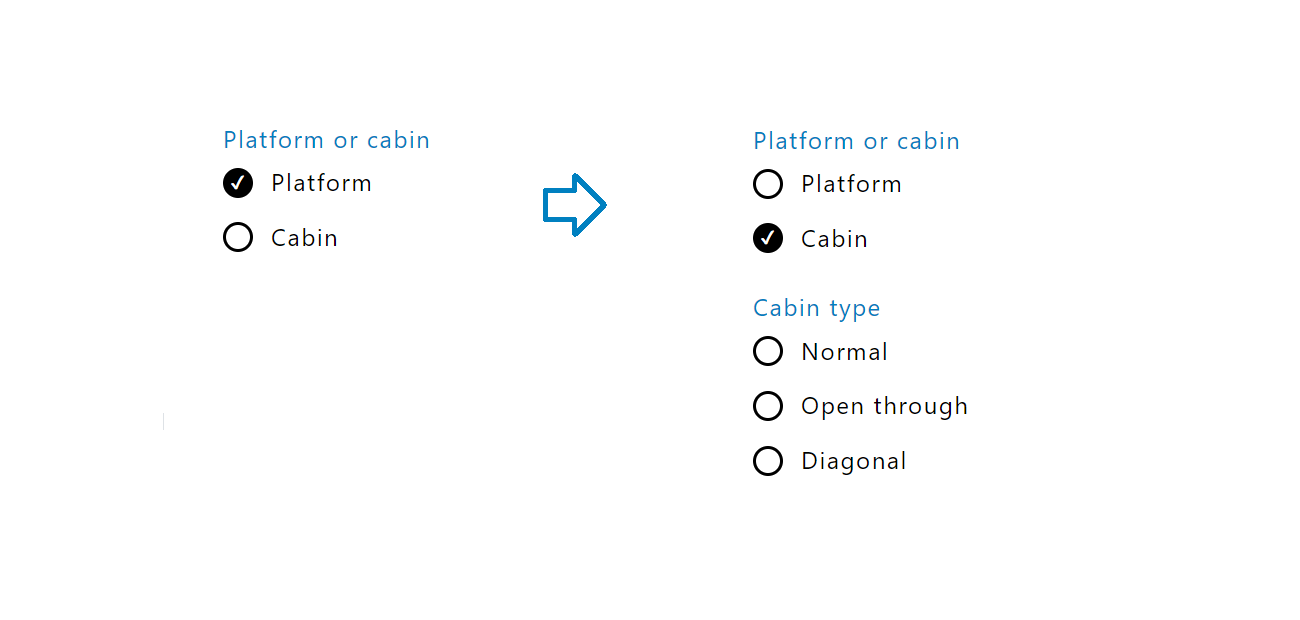
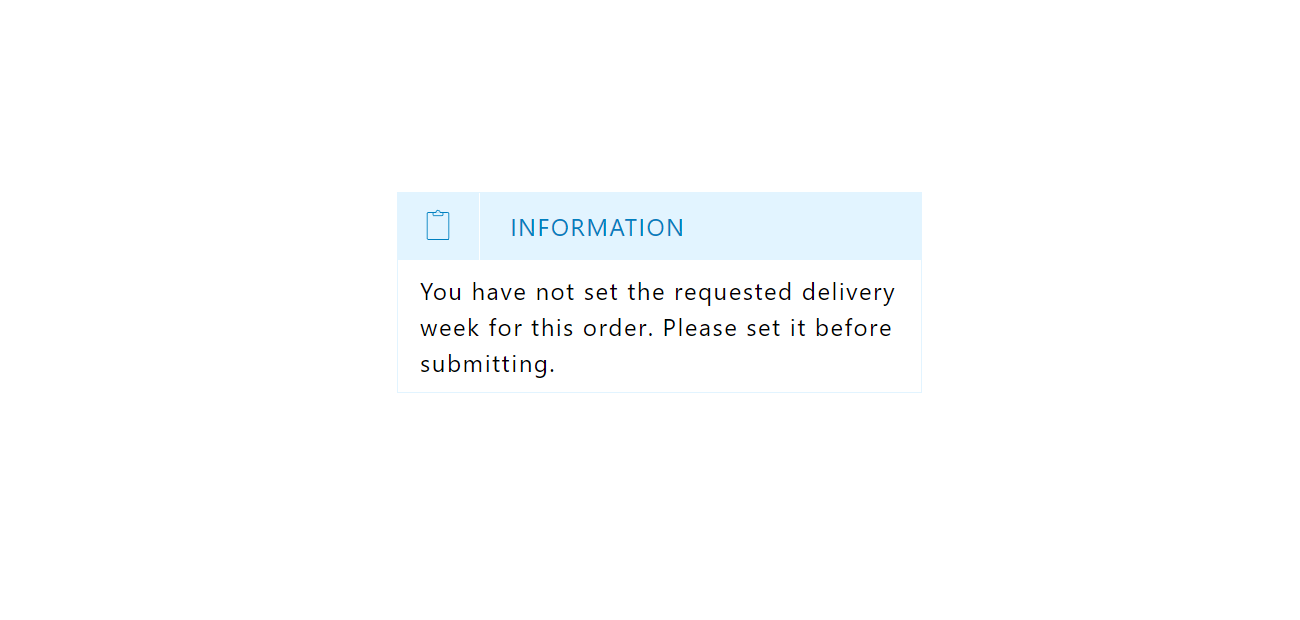
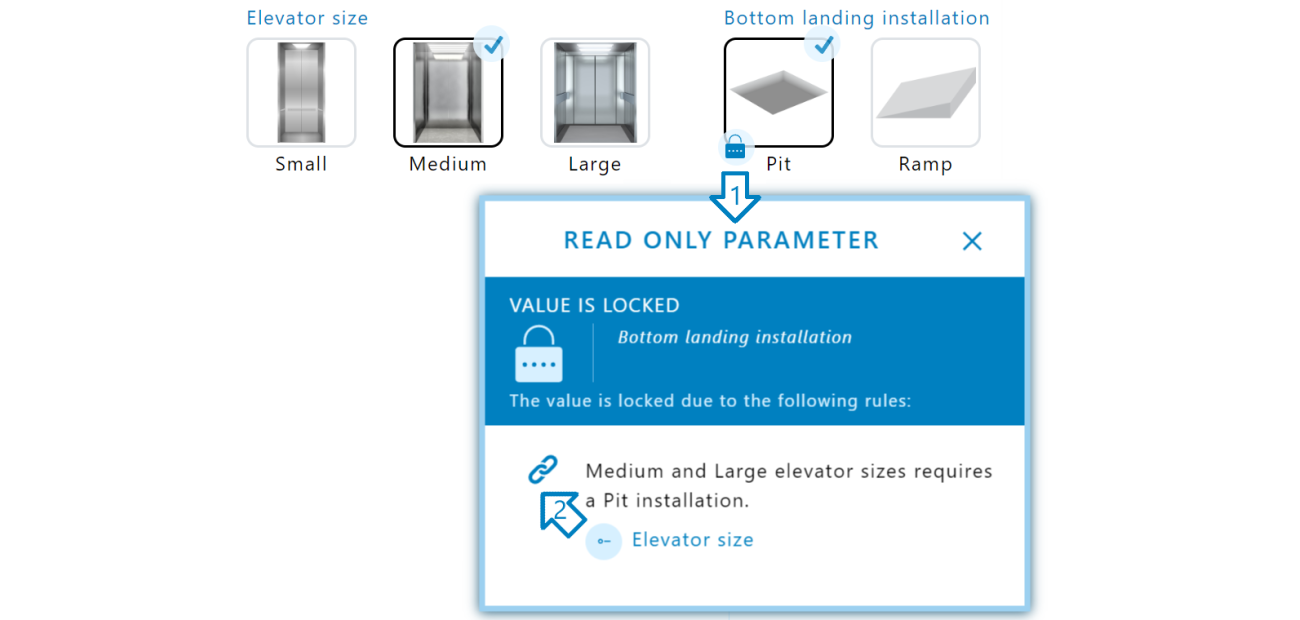
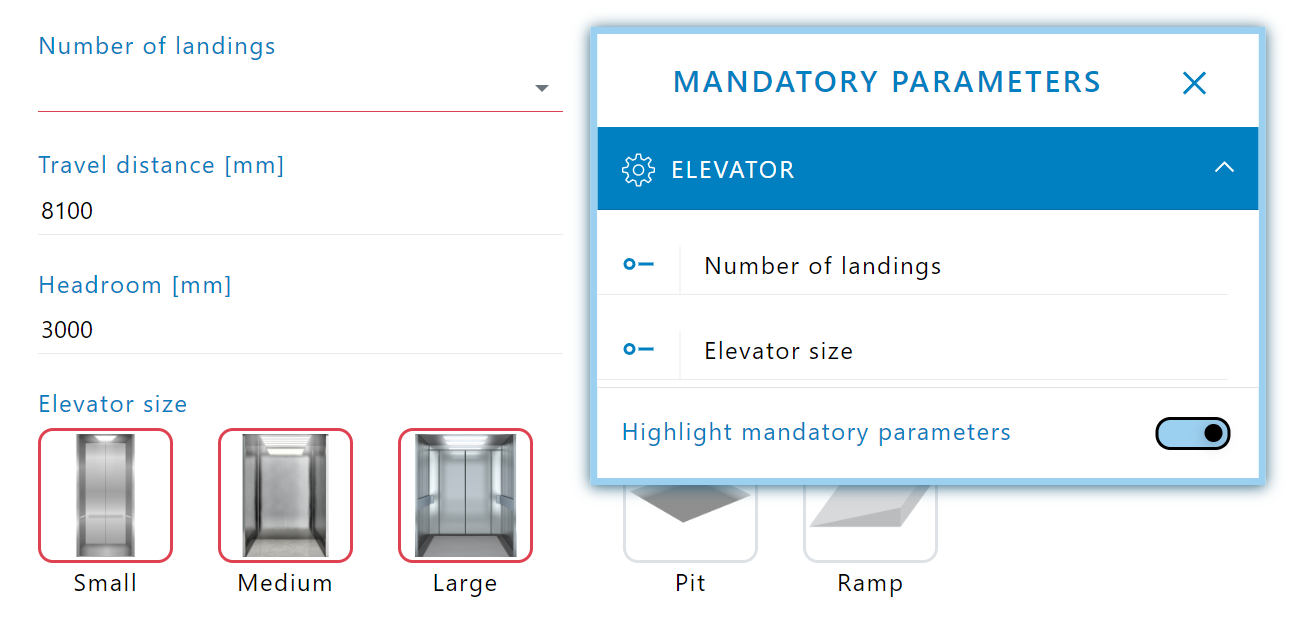
Click on the links below to see examples of how the configurator guides the user. Also, read about 3D visualization.
The power behind the logic: A non-sequential rule engine
When dealing with a high number of product variations, traditional, sequential step-by-step logic quickly falls short. Combinum is built on a non-sequential rule engine. This means your sales reps or customers can answer configuration questions in any order they prefer. The engine works independently of the selection sequence, automatically evaluating dependencies, preventing conflicts, and maintaining model integrity in real time.
Our architecture bridges the gap between fast deployment and limitless complexity by dividing logic into simple and advanced rule types. Learn more about our overall approach to rules and constraints in Combinum.

Simple rules for fast maintenance
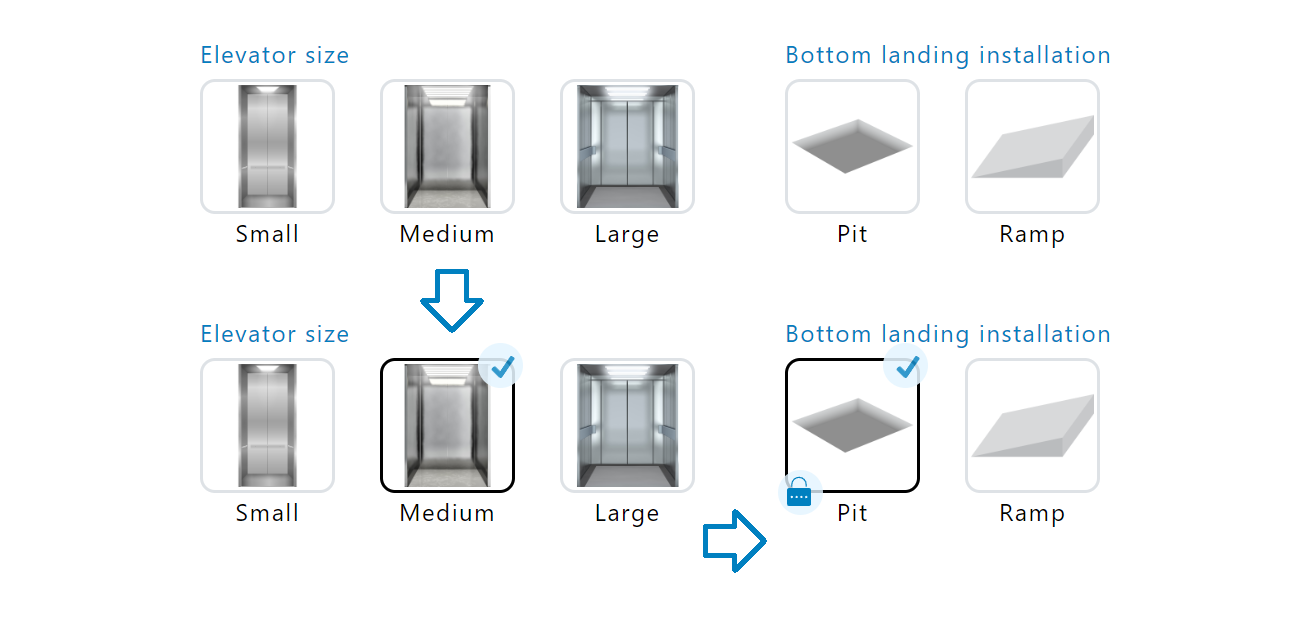
Configure Disallowed combination rules, Assignment rules, and Inclusion rules without writing a single line of code. Any engineer can easily build and maintain these rules. They possess built-in, two-way intelligence: if Option A cannot be combined with Option B, the system automatically handles the restriction both ways. You only define the rule once, drastically reducing maintenance time as your product catalog grows.
See our full guide on types of rules.

Advanced rules for endless complexity
When your product logic requires complex algorithms or multi-level dependencies, utilize our expression language. Use Assignment expression rules and Inclusion expression rules driven by Boolean logic, formulas, and automated table lookups that fetch data dynamically from dictionaries.
Read about configuring assignment expression rules and inclusion expression rules.

Intelligent conflict resolution
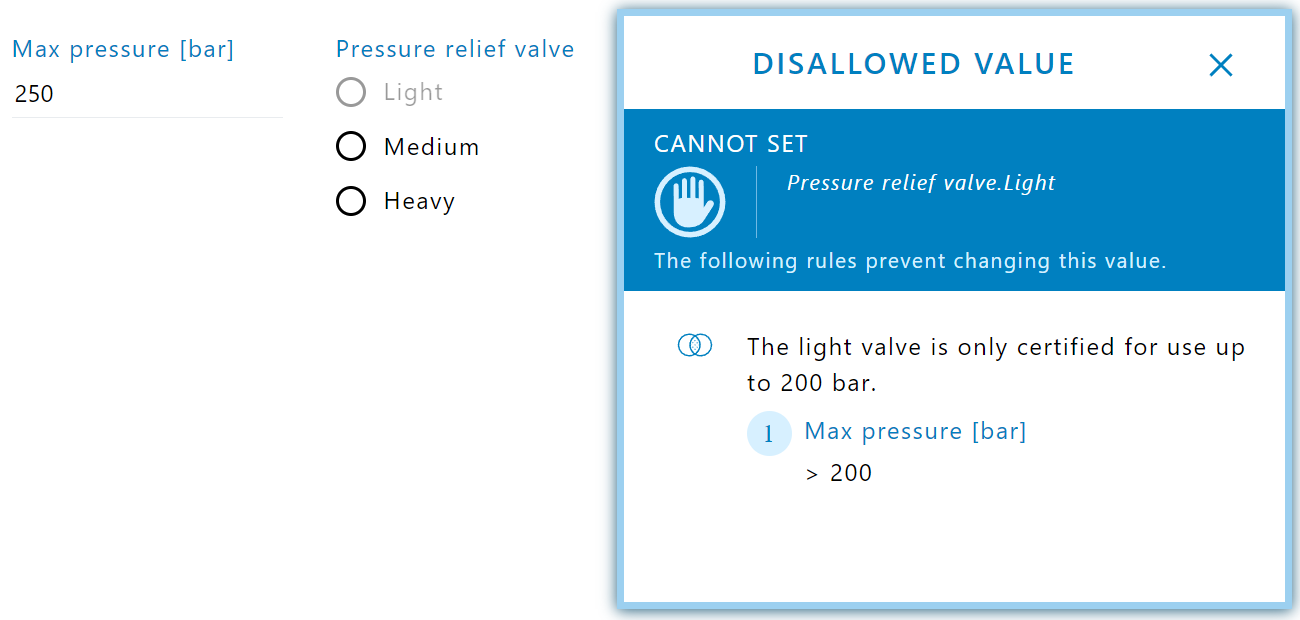
The engine doesn't just block inputs; it resolves friction. Features like Automatic unlock will dynamically clear a previously set parameter to let a user switch to a new product model smoothly. To protect product integrity, Warning attributes can be configured to block a configuration from being saved or promoted to a higher state if critical engineering rules are violated.
Read more about our architecture for conflict resolution and the concept of the non-sequential rule engine.

Deep nesting and propagation
Built for complex, multi-level system configurations. Seamlessly propagate parameter values from a parent configuration down to dynamically generated child instances recursively. This ensures that every sub-component automatically stays perfectly synchronized with the overall system logic, eliminating manual data entry and configuration errors.
Learn how propagation of parameters automates multi-level logic.
Ready to see the rule engine in action?
Experience a rule engine that adapts to your exact engineering logic.