What is a configurable bill of materials (CBOM)?
In custom manufacturing, speed and accuracy are everything. When a customer requests a highly customized product, sales teams need to provide a quote in minutes, and the factory floor needs a flawless parts list to begin production.
However, for businesses running on traditional setups, this process often creates a massive bottleneck. The solution to this friction is a configurable bill of materials (CBOM).
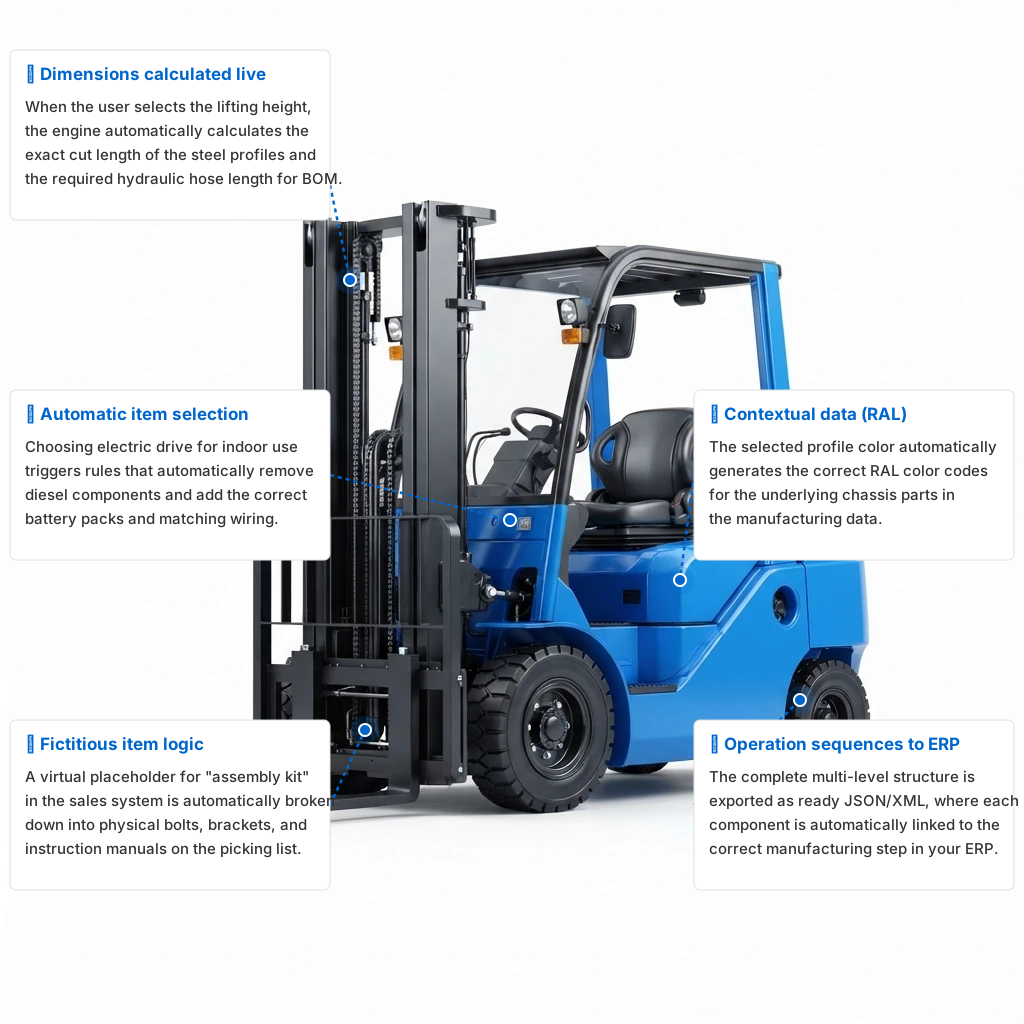
Understanding the configurable bill of materials (CBOM)
A standard, static bill of materials (BOM) is a fixed list of raw materials, components, and quantities required to build one specific product. This works perfectly for mass production where nothing changes.
But the moment a product line becomes customizable - offering various dimensions, motor types, attachments, or finishes - static BOMs break down. Writing a unique static BOM for every potential product combination is practically impossible.
A configurable bill of materials (CBOM) replaces this rigid approach. Often referred to in the industry as a 150% BOM, a CBOM is a parameterized master parts list. It contains every single component, variant, and sub-assembly that a product line could ever possibly use.
How a CBOM works in practice
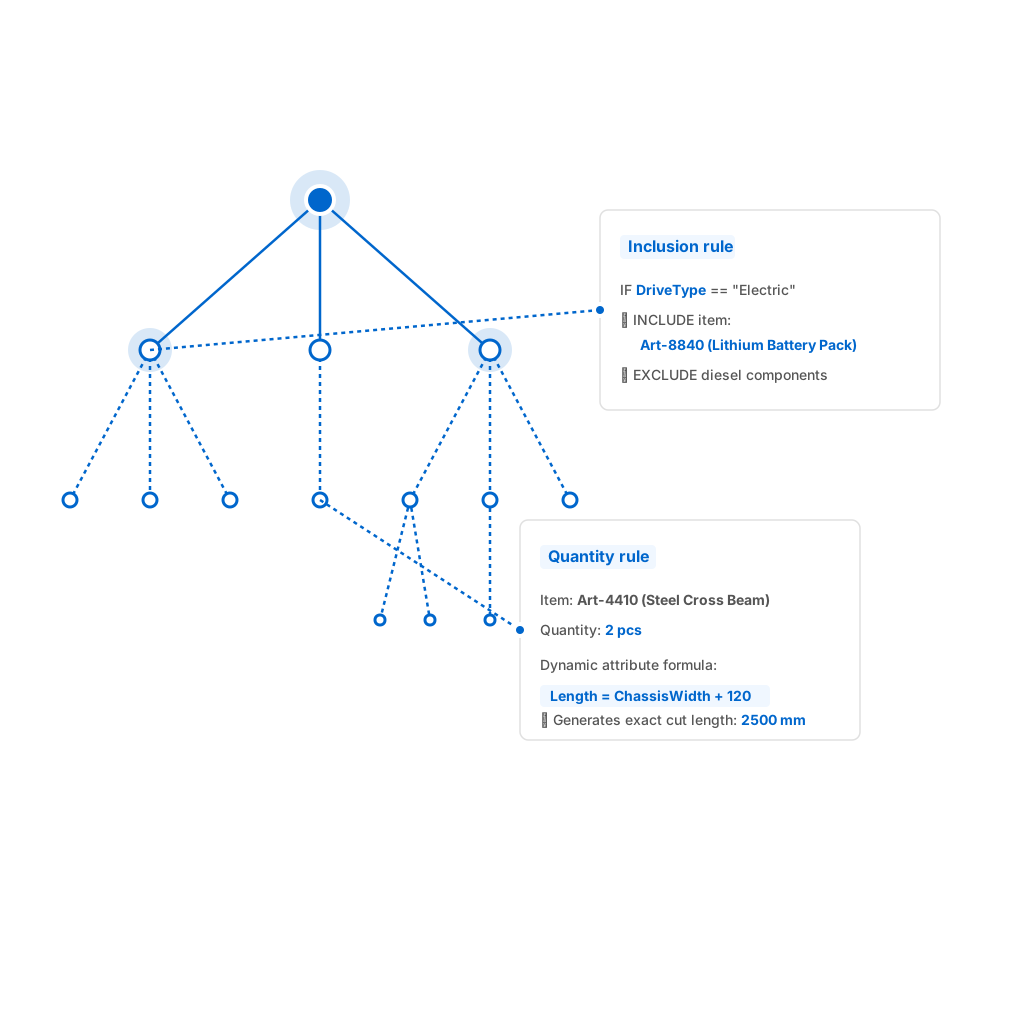
A CBOM does not operate in isolation; it lives directly underneath a product configurator or a CPQ (Configure, Price, Quote) system. When a salesperson or a buyer selects options in the user interface, a centralized engineering rule library automatically resolves the master 150% BOM down to a 100% manufacturing BOM.
The system automatically resolves and updates the parts list through four core rules:
-
Selection rules: If an operator selects an electric drive type, the rule library automatically includes the correct battery pack and wiring harnesses while actively excluding diesel components.
-
Dynamic quantities: Rather than using fixed numbers, the system automatically computes exact piece counts or material lengths in millimeters. These quantities multiply dynamically and recursively down the structure tree.
-
Dynamic properties: Instead of picking a pre-defined part number for every physical length, the system calculates exact cut dimensions and material requirements recursively down the structure tree based on live variables.
-
Dynamic operation sequences: The logic goes beyond raw parts by automatically calculating the required manufacturing steps, such as cutting, welding, or assembly times.
The final output is an error-free, ready-to-use parts list generated the exact second the configuration is finalized.
Six signs your business has outgrown static BOMs
Many manufacturing setups leak margin quietly through manual workarounds before they realize their data structure is broken. Common signs include:
Delayed quoting
Sales teams cannot issue a quote independently. They must wait for engineering to manually review specifications and build a bill of materials for each inquiry.
Shop floor errors
Assembly teams or installers receive wrong parts or incompatible sub-assemblies due to human copy-paste mistakes during manual order translation.
Eroding margins
Salespeople price custom modifications from memory or outdated offline spreadsheets, accidentally selling complex configurations below actual cost.
Slow price propagation
Updating component prices across individual sheets or legacy catalogs takes weeks, causing the business to send outdated pricing to clients.
Engineering drain
Highly skilled engineers spend a significant portion of their workweek rebuilding production data and BOMs from quote PDFs instead of developing products.
Siloed tribal knowledge
Critical product logic and configuration rules live only in the heads of a few senior engineers. This lack of centralized data documentation creates extreme operational vulnerability and dependency during hiring or scaling.
Best practices
Transitioning to a dynamic CBOM structure requires a strategic approach to data modeling. Leading manufacturers follow these core principles:
-
Establish low-code administration: Avoid hardcoding rules into an ERP or custom software. Use a structured, visual tree interface so engineers can manage formulas and complex multi-level dependencies without writing source code.
-
Model rules collaboratively: Never let sales teams write configuration rules in a vacuum. Build the rule library with product engineering and production managers to guarantee that every generated specification can actually be manufactured.
-
Automate the ERP handoff: A complete CBOM pipeline should pass the resolved parts list directly into your ERP system via automated JSON or XML exports. This ensures procurement and job scheduling trigger instantly when a deal closes.

Conclusion
A configurable BOM is the vital link that turns a customized, made-to-order product line into a streamlined digital workflow. By moving the product logic out of your engineers' heads and into a centralized, rule-driven architecture, you delete the translation step between sales and the factory floor.
About the author